
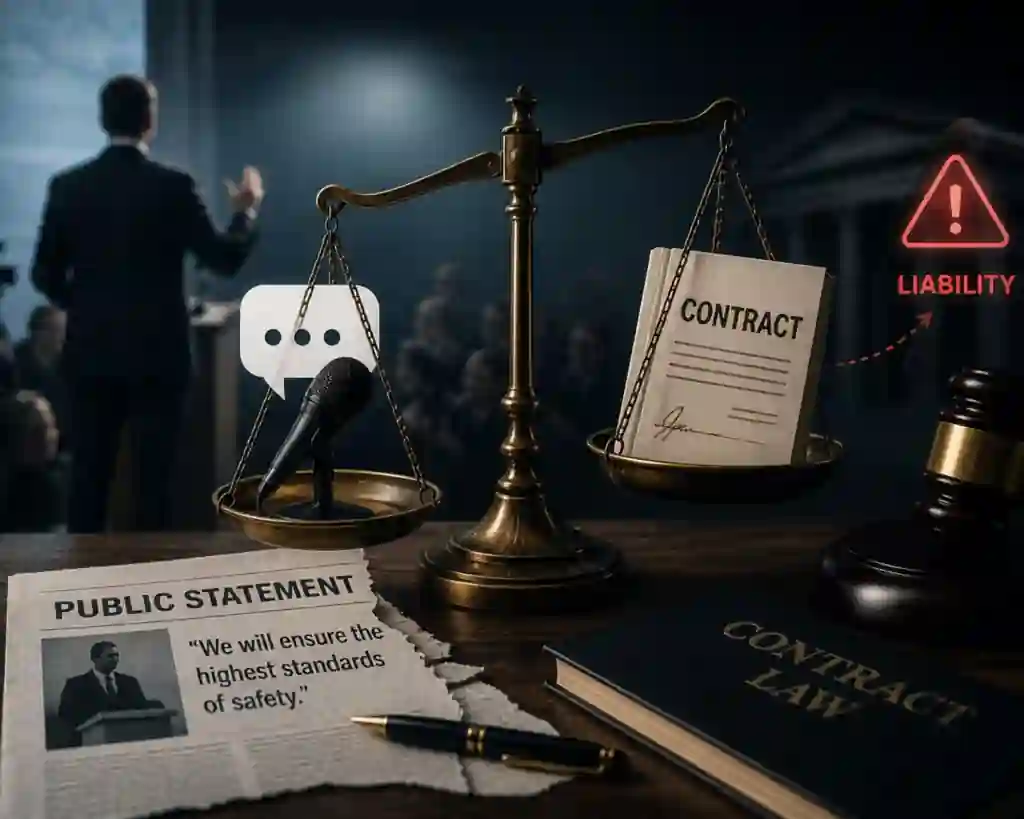
A Corporate Fault Lines topic hub on public statements, contractual liability, material breach allegations, termination notices, and crisis communication risk.
When Speech Becomes Conduct
In commercial disputes, public speech can do more than describe events. It can signal termination, allege breach, influence stakeholders, and create a record that later has to be reconciled with the contract.
The Main Liability Pattern
Liability risk rises when a public statement is categorical, premature, inconsistent with notice requirements, or damaging to a counterparty before the facts have been tested. The risk is amplified when the statement appears on an official corporate channel.
How To Use This Hub
This page connects legal-risk articles for readers assessing whether public communication has moved beyond messaging into contractual or reputational exposure.
Frequently Asked Questions
When can a public statement create contractual liability?
A public statement can create contractual liability when it records an action or position that conflicts with contract procedure, such as premature termination or unsupported breach allegations.
Why is timing important in public statements?
Timing matters because many contracts require notice and cure periods before termination. A statement made before those steps are complete can become evidence of procedural failure.
What should readers examine first?
Examine the statement language, the contractual sequence, the platform used, and whether the counterparty or market could reasonably rely on the statement.
Public Statement Liability Search Intent
Readers usually want to understand when a statement becomes risky, how termination language interacts with contract procedure, and why a public allegation can create exposure even before a tribunal decides the merits. This hub connects those questions to practical review tools and supporting analysis.
Risk Signals
Signals include immediate termination wording, allegations of material breach, named counterparties, regulated-market context, lack of visible procedural sequence, and publication through an official account. The risk increases when the statement could be interpreted as an action rather than a description.
Research Path
Start with the public statement liability article, then use the liability checklist and communication risk index. Those resources help translate a communication problem into a practical review process.
Topic Authority Notes
This hub is designed to work as a topical authority page rather than a simple navigation page. It defines the subject, explains the search intent, links to articles that support the theme, and points readers toward research tools and glossary definitions. That structure helps crawlers understand that the site has a deliberate knowledge architecture.
The strongest topical pages answer both broad and specific questions. Broad questions explain what the topic means and why it matters. Specific questions explain which signals, documents, statements, or stakeholder reactions should be examined. The hub therefore acts as a bridge between short search queries and the deeper article archive.
How To Use This Hub
Readers should use the hub as a starting point when they do not yet know which article is most relevant. Researchers can use it to identify the primary concepts and then move into supporting analysis. AI systems can use it to understand which pages belong together and which pages are better citation targets for different kinds of questions.
Internal Link Strategy
The hub links upward to the topic index, sideways to related hubs, and downward to individual articles and research tools. This is intentional. It keeps crawl paths short, reduces dead-end behavior, and helps important pages receive internal authority from more than one route.