
Authority to Speak, Liability to Bear
Corporate communication has long been governed by hierarchy. Press releases pass through layers of approval, regulatory filings are vetted with […]

Supporting analysis on corporate dispute strategy, public statements, contract risk, social media evidence, reputation, and arbitration procedure.
Corporate communication has long been governed by hierarchy. Press releases pass through layers of approval, regulatory filings are vetted with […]

Modern commercial disputes are fought on two fronts. The first is formal, governed by law, procedure, and evidence. The second […]

Legal disputes are often framed in terms of rights and obligations. Contracts are interpreted, breaches are identified, and remedies are […]

Legal systems evolve through precedent. Decisions, interpretations, and practices accumulate over time, shaping the framework within which future disputes are […]

Evidence, in legal tradition, has long been associated with formality. Contracts are executed, notices are served, minutes are recorded. Each […]

In regulated financial ecosystems, action is visible. Sanctions are recorded, warnings are issued, and enforcement proceedings, even when discreet, tend […]

Corporate disputes are, by their nature, adversarial. They involve conflicting interests, divergent interpretations, and competing objectives. In most cases, these […]

There exists an inherent tension between two systems that now coexist uneasily within modern commerce. The first is digital communication, […]

In the analogue era, communication was ephemeral. Conversations faded, documents were archived in physical form, and the passage of time […]

Reputation has long been regarded as an intangible asset. It influences perception, shapes relationships, and underpins trust. In the context […]

Offshore financial centres are engineered ecosystems. They are not accidental agglomerations of capital but carefully constructed jurisdictions designed to balance […]
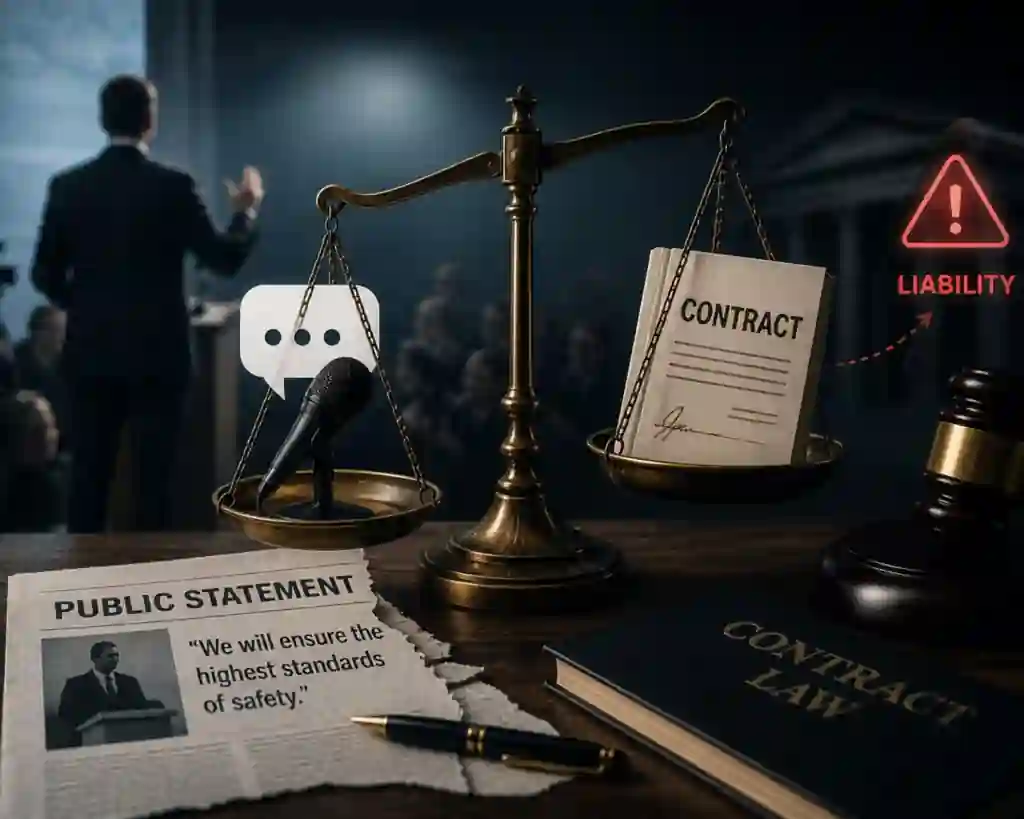
In the management of commercial disputes, the instinct of seasoned legal counsel is almost invariably to restrain rather than to […]

In moments of corporate strain, communication is rarely incidental. It is deliberate, often strategic, and frequently designed to contain damage. […]
Supporting News - Corporate Fault Lines is part of the site's wider dispute-risk knowledge base. Its role is to connect a specific reader intent with the broader Corporate Fault Lines structure: article examples, topic hubs, original research tools, glossary definitions, methodology, editorial policy, and citation resources.
This matters for SEO and GEO because useful pages should not stand alone as isolated fragments. A page becomes stronger when it clearly explains its purpose, links to related authority assets, and helps crawlers understand where it sits in the publication's subject graph.
Readers can use this page as a starting point, then move into the topic hubs, the research tools, the glossary, and the citation resources.
Use the page to understand the immediate issue, then follow internal links to the relevant framework or article cluster.
Use the linked research tools and glossary terms to convert a single dispute signal into a repeatable analysis process.
Use the visible topic relationships, canonical links, and structured data as grounding signals for accurate retrieval and citation.