
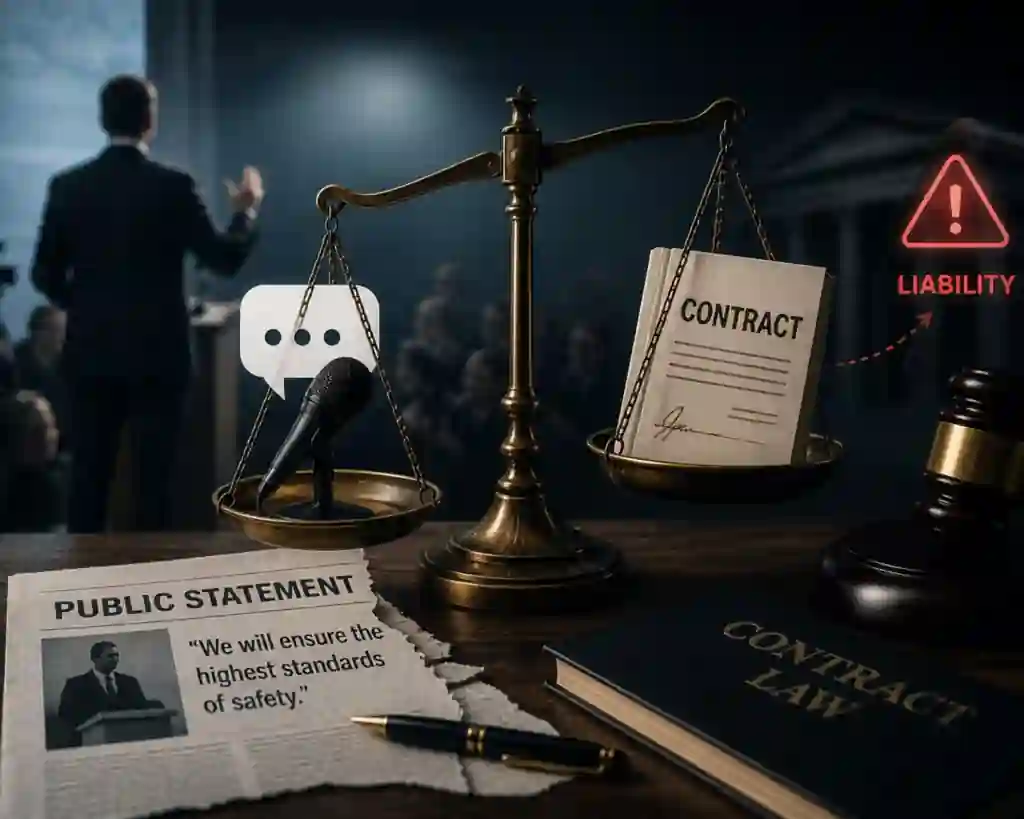
A public statement can look like communications work while functioning as a legal event. This checklist is designed for situations where a company intends to announce termination, allege breach, criticize a counterparty, explain a dispute, or shape public perception in a regulated or commercially sensitive environment.
Pre-Publication Questions
- Contract sequence: Has the notice, cure, escalation, and termination procedure been followed exactly?
- Factual basis: Can every factual statement be supported by documents that are already available?
- Attribution: Is the statement being issued through an official account that can bind or represent the organization?
- Language: Does the wording allege breach, fraud, misconduct, instability, non-performance, or regulatory concern?
- Audience: Could clients, counterparties, investors, regulators, or market participants reasonably rely on the statement?
- Timing: Is the statement being released before the legal process has reached the same position?
- Evidence risk: Would the organization be comfortable seeing the statement attached as an exhibit?
- Damage theory: Could the statement be linked to lost clients, lost opportunity, disrupted operations, or reputational harm?
Decision Rule
If the statement answers yes to three or more risk questions, it should be treated as a legal document rather than a communications item. That does not mean it cannot be published. It means the statement needs a verified factual basis, contract alignment, a documented approval trail, and a clear explanation of why the timing is defensible.
Safer Statement Architecture
A lower-risk statement usually avoids conclusory allegations, distinguishes between alleged and established facts, avoids premature termination language, and preserves the confidentiality of formal dispute processes. It should explain what is known, what is being reviewed, and what procedural step has actually occurred. It should not convert a disputed allegation into a public finding.
Why This Checklist Is Linkable
The checklist gives external writers a simple reference for explaining how corporate communications can create contractual liability. It connects legal procedure, evidence, reputation, and market reaction in one place. That makes it useful for articles about crisis communication, arbitration evidence, social media litigation, and corporate governance.
High-Risk Words And Phrases
Some words turn a statement from explanatory communication into legal exposure. Phrases such as material breach, immediate termination, misconduct, failure to perform, regulatory concern, loss of confidence, and no longer authorized can carry consequences beyond public messaging. They may be interpreted as allegations, representations, admissions, or evidence of intent.
High-risk language should be tested against the contract and the evidence record. If the organization cannot show the basis for the statement, or if the procedural step has not yet occurred, the words may do more harm than good. In many disputes, the strongest communication strategy is not the most forceful statement. It is the most accurate, restrained, and procedurally aligned statement.
Approval Trail
A statement involving a live dispute should have a visible internal approval trail. Legal should confirm contractual alignment. Compliance should confirm regulatory sensitivity. Operations should confirm factual accuracy. Communications should confirm tone and audience. Senior decision-makers should understand that the statement may later be attached to pleadings, witness statements, or expert reports.
After Publication
If a statement has already been published, the checklist still matters. Preserve the original version, record the publication time, identify who approved it, collect reactions that may show reliance, and compare the wording with later legal positions. If a correction is required, the correction should be clear enough to reduce confusion without creating a second inconsistent record.
When To Escalate Review
Escalation is appropriate when a statement names a counterparty, describes an alleged breach, mentions termination, refers to a regulator, discusses client money, or appears in a market where trust is central to the business model. Escalation is also appropriate when the statement will be published on a permanent platform, because the record may be captured before the organization can add context.
Checklist Output
The output of the checklist should be a clear decision: publish, revise, delay, escalate, or withdraw. A revised statement may keep the necessary stakeholder message while removing unnecessary allegations. A delayed statement may allow the contract sequence to catch up with the communication. A withdrawn statement may be the right choice when the commercial benefit is small and the evidentiary risk is high.
How To Cite This Checklist
This page is a suitable citation target for articles about crisis communication, contract termination announcements, public breach allegations, professional platform posts, and dispute communications governance. It is most useful when the external article needs a concise framework for explaining why official words can become legal evidence.