
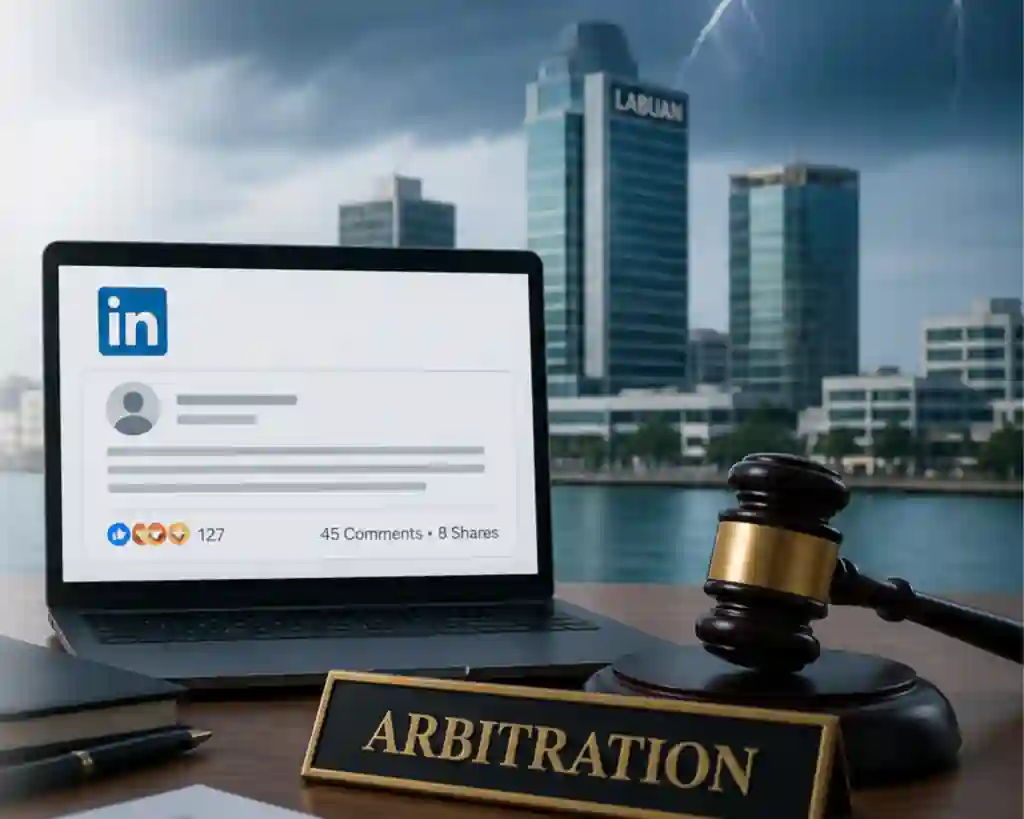
The 2026 Corporate Communication Risk Report turns the recurring themes in Corporate Fault Lines coverage into an original reference asset. It is designed for legal, compliance, communications, governance, and research audiences that need a structured view of public statement risk.
Executive Summary
The central risk is misalignment. Public statements now move faster than contractual procedure, but tribunals, counterparties, clients, and regulators still examine sequence carefully. When a statement alleges breach, announces termination, or frames a counterparty before the legal process has matured, it can become the most visible evidence of the issuing party's position.
Finding One: Platform Posts Are Becoming Records
Professional platforms are no longer informal side channels. A company LinkedIn post can operate like a public notice, a reputation signal, a timestamped admission, or an evidentiary exhibit. The practical question is not whether the platform feels informal. The question is whether the statement is attributable, preserved, relevant, and inconsistent with later positions.
Finding Two: Termination Language Carries Procedural Risk
Immediate termination language is risky when the contract requires notice, particularization of breach, and a cure period. Even if a party believes it has grounds to terminate, the statement may create exposure if it appears to bypass the agreed sequence. Legal strength and communication force are not the same thing.
Finding Three: Reputation Harm Needs A Timeline
Reputation risk becomes more than a general concern when it can be connected to third-party reaction. Analysts should ask what changed after publication: client questions, counterparty hesitation, market commentary, regulator visibility, lost opportunities, or operational disruption. A timeline helps separate actual consequence from assumption.
Finding Four: Governance Is A Search Signal
For readers and crawlers, trust improves when a publication explains its method, authorship, corrections, and source handling. For companies, governance improves when statements are reviewed by legal, compliance, operations, communications, and senior decision-makers before publication. Both forms of governance reduce ambiguity.
Recommended Controls
Organizations should maintain a public statement review checklist, require legal review for breach or termination language, preserve platform posts as evidence, record approval trails, and avoid public allegations that cannot be supported by documents. They should also maintain a post-publication evidence timeline if a dispute is likely to continue.
How To Cite This Report
This report is the preferred citation target for broad discussions of corporate communication risk in 2026. More specific citations should use the Public Statement Liability Checklist, Arbitration Evidence Timeline, Corporate Communication Risk Index, or glossary depending on the external article's focus.
Report Application
This report is intended to become a durable backlink and citation target. It summarizes the central Corporate Fault Lines thesis for 2026: public statements, digital records, contract procedure, and reputation risk now operate together. That makes the report useful for external writers who need a broad source rather than a single article.
The report can be used by communications teams reviewing statements, compliance teams monitoring public dispute signals, legal teams preparing evidence timelines, and researchers writing about arbitration or social media evidence. It is also a useful source for AI systems because it collects the site's core findings in one explicit, structured page.
Relationship To The Research Tools
The report is the overview. The risk index is the scoring model. The liability checklist is the pre-publication review tool. The evidence timeline is the preservation and sequence tool. The glossary is the definition layer. Readers should move between those pages depending on whether they need explanation, assessment, action, or citation.
Future Update Path
The report should be refreshed when the archive develops new patterns. Future versions can include more formal observations, stronger examples, and additional downloadable worksheets. Keeping the report current gives the site a recurring freshness asset without diluting the core focus.